

Hi all,
I have a question. Regarding PZB, would you like to have switchable message system, or would you prefer more costant PZB messaging?
Hi all,
I have a question. Regarding PZB, would you like to have switchable message system, or would you prefer more costant PZB messaging?
milchi I see no problem in moving cab numbers. But DR logo will stay as it is now, because it is already baked in the main texture. There would be much work in resizing and color retouching.
Yes, that is an option. But first things first. And 371 is not just a mere repaint. Class 371 has different gear ratio for maximum speed 160km/h, features static battery charger, different compressor, radio, speedometer, etc. Plenty of work.
We'll see in the future.

Just to bump up the counter, I would be highly interested in a 371 variant as well as modern liveries (ČD, ČDC, DB)
It's always a bit difficult to create realistic scenarios with the old liveries, modern ones that fit the setting of routes and other rolling stock would make this beautifully crafted add-on much more popular I guess.
Maybe so, but I have no license for ČD and DB logos, thus their livery. While to make 371 is possible, I can´t officialy release it without facing accusations from those two companies. To get the license from ČD is not possible atm, because they are not giving it to anyone. No information about DB, though.
Now finally we´re standing on track 
Hello, both versions will be in the install package. So you get them both once bought.
Testing...


...and 90% done...
no baked shadows in the main texture, original CSD nubmering plate and ploughs...
It started finally....
Not quite sure if you´re right in some cases. In 372 class, 1000Hz indicator blinks when brake pipe drops below 3, not 3,5bar. And only when emergency brake (but only when it comes from PZB influence, not Czechoslovak LVZ) is not present (in other words until you FREI it In case of PZB emergency, both 1000 and 500 indicators blink until you release it. In that case only 1000Hz indicator will stay blink until brake pipe is above 3bar.
Also, in case of AZ720 signaling panel, 500Hz indicator never blink. Not even in restrictive mode. Only thing that blinks is "PZB Ein" indicator, but that blinks under any mode, means 1000,500,1000restrictive, 500restrictive. Simply under any limitation.
I have onboard videos from that class.
BUT what I do not know for sure yet is that if "Vü" is signalised after passing active 500Hz magnet or not. In standard situation after passing active 1000Hz and pressing Wachsam Vü is signalised on that small 7seg display according to appropriate limit depending on train type. But that limit change after you pass active 500Hz. And I need to know if in that moment Vü display change itself to new limit or still stay with previous one from 1000Hz. I guess it changes, but not sure.
AZ720 attached...
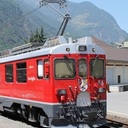
The most obvious route for testing would actually be the Elbe Valley Route. That's where the locomotive fits in best.
I do not own that one 
Hello, german railroaders,
The making of 372 is slowly coming to an end. Few more sounds, some additional scripting and it is done. But before I will give a final blessing to that class, I would like to ask - which route is the best for PZB testing? Personally I do not play them, as normally I do not make german locos. But this time I need an advice in this. What route, especially quick drive is the best for it?
Or - is it hard to make a short straight test route with your signals to test it? I do not know them at all. Who would be willing to do so for me?
Thanks in advance.
Btw - it will have PZ80R program PZB90. That is some sort of prototypical PZB. The same like in, say, BR132/232 from vR. But I will have that control box functional
If anyone is able to get proper sounds for DAT 4a-E - AC main switch on the roof, I would be glad. Both switch on and off sounds from outside. I´m not a specialist for german locos, but I believe this type of AC main switch has been used quite extensively in the past decades. 372 used them and former East Germany supplied them to Skoda factory for this loco class, as we in former Czechoslovakia used different AC catenary - 25kV 50Hz and did not have such devices.
Thanks in advance.

Very nice
Pic from Cab https://www.bahnbilder-leipzig.de/htm/fstand-br180.htm
But that is already cab after reconstruction. I´m doing the original one, or at least I´m trying to.
Hello, traindrivers. After awhile, the cab is complete, except a few details (like PZB switches, etc...)
Scripting has already started, but the long road is still lying in front of me...
Ok, exterior model is already standing on tracks...
Consider the transformer is done...
Things have moved a bit
Btw, that transformer was a product of VEM, german factory I believe. Or correct me if I´m wrong. Definitely not czechoslovak made.
Hello Hallenser
Ok then, I was beginning to wonder what could go wrong with latest update Thanks for feedback.
Btw, it´s not only 3kV= locos, but also pure 25kV~ locos. The only difference are two- or multi-system machines.